
Marketing can feel overwhelming when you’re just starting out—but it doesn’t have to be. At its core, marketing is simply understanding your audience and helping them understand you. Whether you are a small business owner, a student, or someone exploring the marketing world, this beginner’s guide will walk you through the essentials in a simple and practical way.
1. What Is Marketing?
Marketing is the process of:
- Identifying customer needs
- Creating value through products or services
- Communicating that value
- Building long-term customer relationships
In simple terms: Marketing is how you connect your product with the right people.
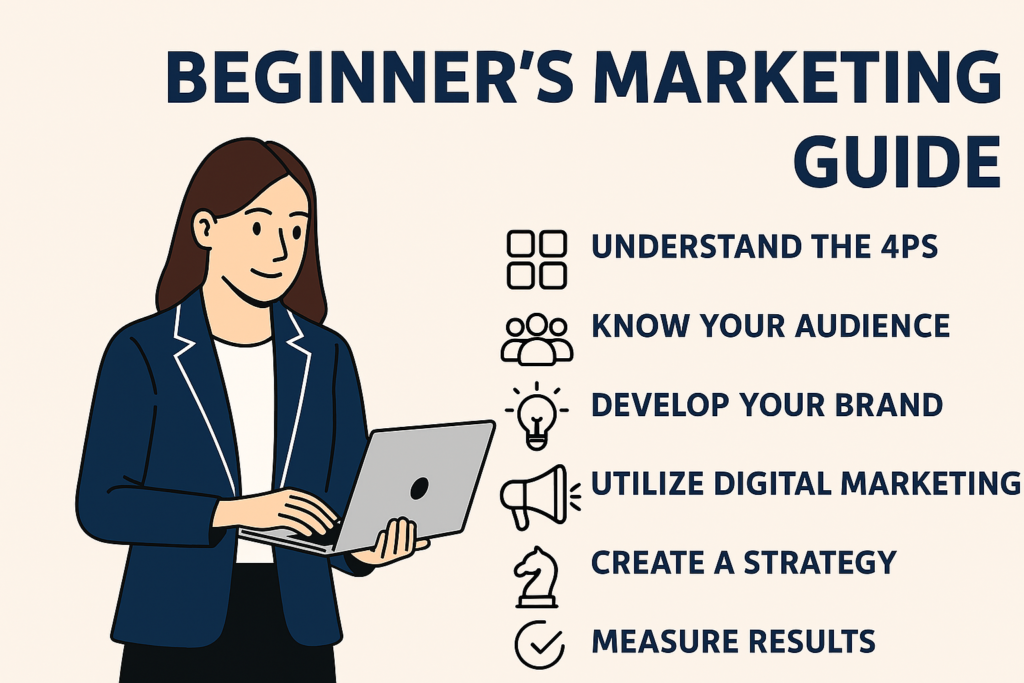
2. The 4 Pillars of Marketing (The 4Ps)
1️⃣ Product
What are you selling?
It could be:
- A physical product
- A digital service
- A personal brand
Make sure your product solves a real problem.
2️⃣ Price
How much does it cost?
Your pricing should be based on:
- Market demand
- Competitor pricing
- Customer perception of value
3️⃣ Place
Where do you sell it?
- Online store
- Social media
- Retail outlet
- Marketplaces like Amazon or Flipkart
Choose the platforms where your audience spends time.
4️⃣ Promotion
How will people know about your product?
Popular promotion methods include:
- Social media marketing
- Paid ads
- Influencer collaborations
- Email campaigns
- Content marketing
3. Understanding Your Audience
Before spending a single rupee on marketing, ask:
- Who is my ideal customer?
- What problems are they facing?
- Where do they search for solutions?
- What motivates them to buy?
This is called creating a customer persona—a simple profile representing your dream customer.
4. The Importance of Branding
Branding is more than a logo. It’s the overall experience people have with your business.
It includes:
- Your tone of voice
- Visual identity (colors, fonts, style)
- Customer service
- Reputation
- Experience
Strong branding builds trust—and trust drives sales.
5. Digital Marketing Basics Every Beginner Should Know
Today, most marketing happens online. Here are the must‑know components:
📌 Social Media Marketing
Platforms like Instagram, Facebook, LinkedIn, and YouTube help you:
- Build visibility
- Engage with customers
- Share content
- Drive traffic
📌 Content Marketing
Creating helpful content that answers customer questions.
Examples:
- Blogs
- Reels
- Infographics
- Videos
📌 SEO (Search Engine Optimization)
Optimizing your content so it appears on Google when people search for related topics.
📌 Email Marketing
Still one of the most effective ways to:
- Nurture leads
- Send offers
- Build long-term relationships
📌 Paid Advertising
Running ads on:
- Meta (Facebook + Instagram)
- YouTube
Paid ads help you reach people faster.
6. The Beginner Marketing Strategy (Easy 5-Step Formula)
Step 1: Know Your Audience
Understand who you are targeting.
Step 2: Know Your Message
Communicate what problem you solve and why you are different.
Step 3: Choose Your Platforms
Start with 1–2 platforms where your audience is active.
Step 4: Create Consistent Content
Share valuable content that educates, entertains, or inspires.
Step 5: Measure and Improve
Track what’s working through analytics and adjust your strategy.
7. Tools Beginners Can Use
These free tools make marketing easier:
- Canva – Designs, posts, banners
- Google Analytics – Website performance
- Meta Business Suite – Schedule and manage social posts
- Mailchimp – Email marketing
- Google Keyword Planner – Keyword research
Final Thoughts
Marketing isn’t about being everywhere; it’s about being meaningful where it matters.
Start small, stay consistent, keep learning—and over time, your marketing will become strong, strategic, and results-driven.