
Everyone is talking about AI like it’s either magic or a threat. In reality, it’s neither. AI is a tool that removes guesswork from marketing — and that’s why it feels disruptive. The marketers who win in the next decade won’t be the loudest or the trendiest. They’ll be the ones who understand how to combine human judgment with machine intelligence.
AI Isn’t Replacing Marketing — It’s Replacing Confusion
The best marketing happens when humans and AI work together.
Everyone is talking about AI like it’s either magic or a threat. In reality, it’s neither. AI is a tool that removes guesswork from marketing — and that’s why it feels disruptive. The marketers who win in the next decade won’t be the loudest or the trendiest. They’ll be the ones who understand how to combine human judgment with machine intelligence.
What AI is actually changing
For years, marketing decisions were based on partial data, intuition, and trial-and-error. Campaigns worked — but often nobody fully knew why. AI changes that.
AI doesn’t invent creativity. It clarifies patterns.
It tells us:
• what customers are likely to click
• when they’re most active
• which message resonates
• which audience converts
• where money is being wasted
The real disruption is not automation.
It’s clarity. 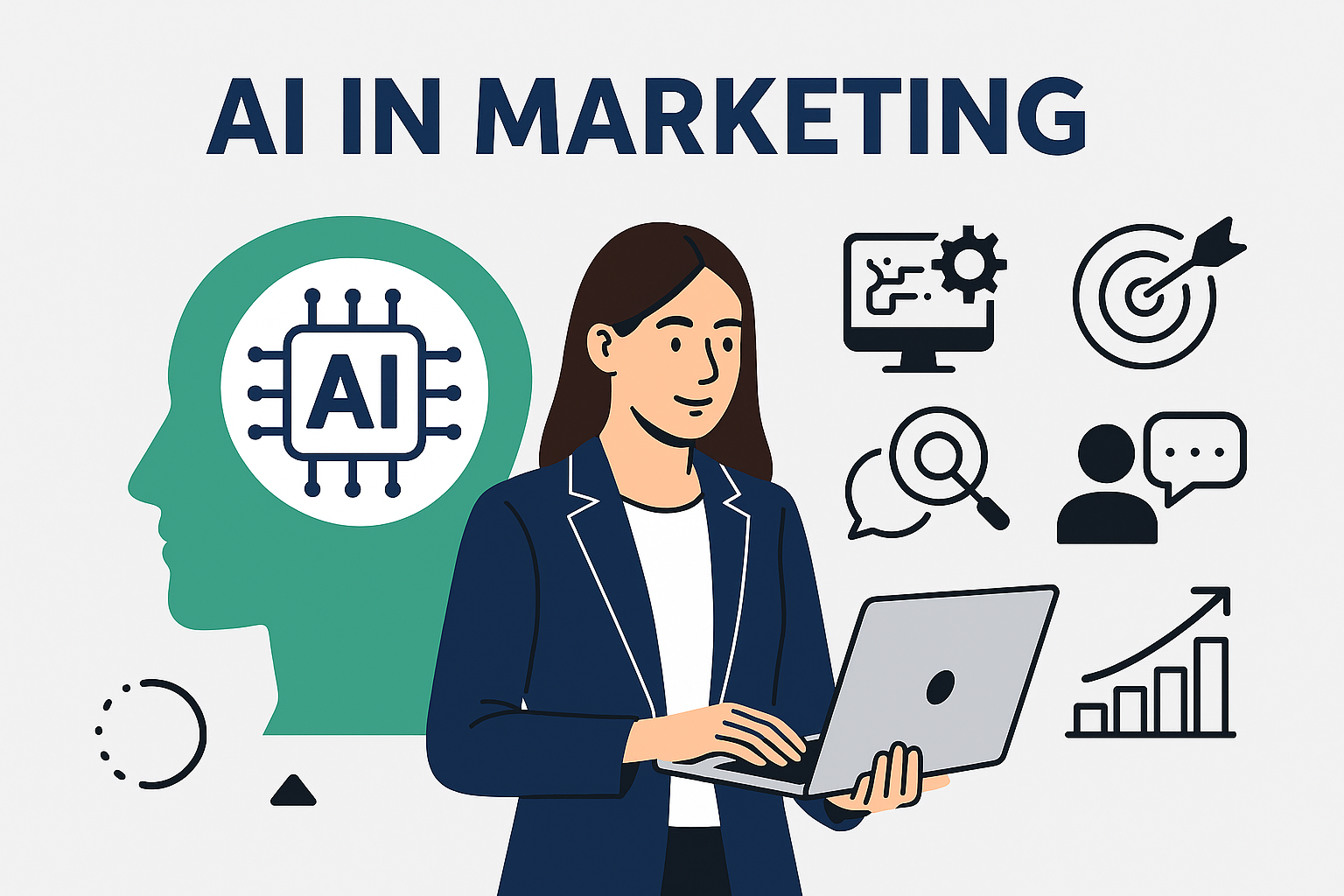
Instead of guessing, marketers can now test faster, analyze deeper, and adjust in real time.
That removes confusion — and confusion has always been marketing’s biggest hidden cost.
What still stays human
Despite the hype, AI doesn’t replace the core of marketing.
It can optimize, but it can’t:
• understand culture the way humans do
• read emotional nuance
• build trust
• create brand meaning
• make ethical decisions
• tell stories that feel lived-in
AI can suggest headlines.
Humans decide what feels true.
AI can segment audiences.
Humans decide what message matters.
The future isn’t AI vs humans.
It’s humans using AI to think more clearly.
The marketer becomes less of a guesser and more of a strategist.
A real-time example
Look at how brands now run ad campaigns.
Before AI-driven tools, marketers would run 2–3 ad versions and wait weeks to evaluate performance. Budget decisions were slow and reactive.
Today, platforms like Meta and Google use AI to test dozens of micro-variations automatically:
• headlines
• visuals
• audience clusters
• timing
Within hours, weak combinations are removed and strong ones are scaled.
The marketer’s role shifts from manually adjusting campaigns to interpreting insights and shaping strategy.
The machine handles the noise.
The human handles direction.
That’s not replacement.
That’s partnership.
Simple steps to start using AI without overcomplicating it
You don’t need to become a technologist to benefit from AI. Start small and practical:
1. Use AI to summarize data
Let tools highlight patterns you might miss.
2. Test content variations faster
Generate multiple drafts and refine the best one.
3. Automate repetitive reporting
Free time for strategy, not spreadsheets.
4. Ask better questions
AI is only as good as the prompts you give it.
Clear thinking leads to better output.
5. Keep human judgment final
Use AI for insight, not blind decisions.
The goal is not to hand over marketing to machines.
The goal is to remove friction so marketers can focus on what actually matters: ideas, strategy, and connection.
The real shift
AI isn’t ending marketing.
It’s ending unnecessary confusion.
And when confusion disappears, good marketers become great ones — because they can finally see what’s working clearly.
The advantage won’t belong to people who chase every new tool.
It will belong to those who learn how to combine intelligence with intention.
That’s where modern marketing is heading.
Smarter.
Simpler.
More human, not less.